
What to Eat in Guilin: Authentic Local Foods & Specialties
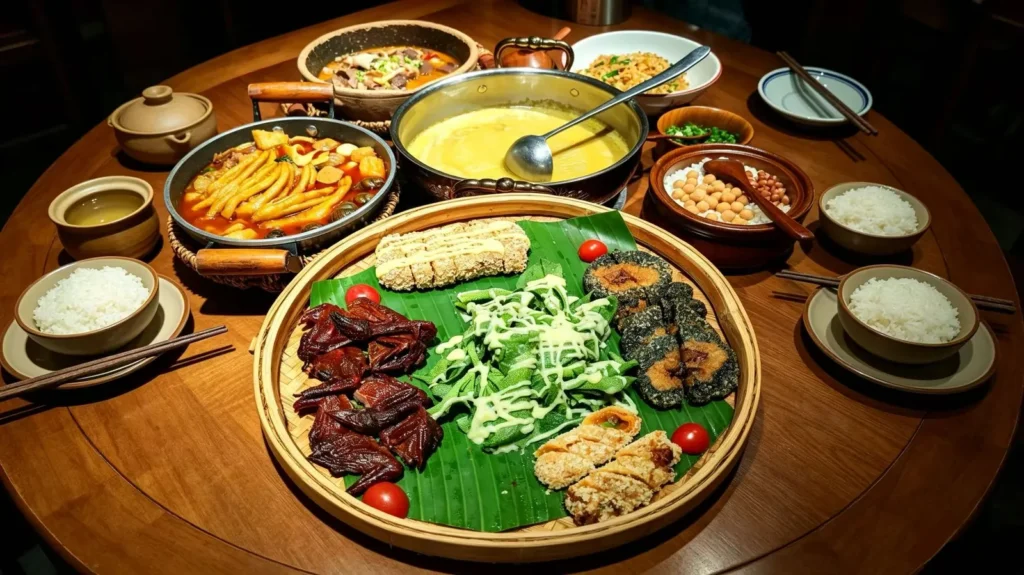
Guilin’s food is deeply shaped by its landscape. Surrounded by karst mountains, rivers, and lush countryside, the region has plenty of water and fertile land, making it ideal for growing rice. As a result, rice has long been at the heart of Guilin’s food culture, from rice noodles to glutinous rice and bamboo tube rice.
The quality of the local water and rice also plays an important role in Guilin’s most famous food — Guilin Rice Noodles. Unlike many packaged or factory-made rice noodles, traditional Guilin rice noodles are freshly pressed from locally milled rice, giving them their distinctive texture and flavor. The rivers and streams also provide an abundance of fresh fish and other freshwater ingredients, while chicken and duck are staples of local countryside cooking.
These local ingredients appear in many of Guilin’s signature dishes, giving the cuisine a distinctly local character — fresh, hearty, and closely connected to the region’s mountains, rivers, and countryside. In this guide, you’ll discover some of the local dishes worth trying, along with practical tips for finding restaurants that serve authentic, well-made versions of them.
Must-Try Guilin Foods & Local Specialties
Next, we’ll look at some of Guilin’s most distinctive local dishes. Some are beloved everyday favorites among locals, while others have strong flavors or ingredients that may not suit every visitor. Take a look and choose what sounds right for you.
Guilin Rice Noodles
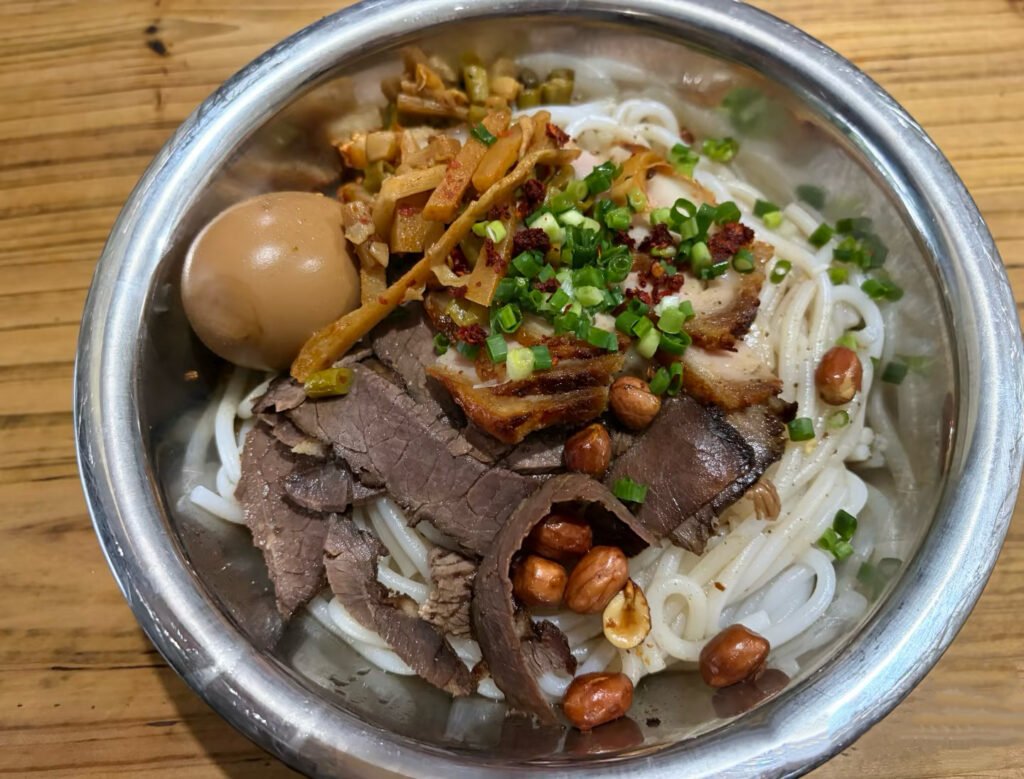
Guilin Rice Noodles are the most iconic local snack in Guilin. They’re traditionally eaten for breakfast, but locals enjoy them throughout the day. The noodles are thick, round, and white, topped with a few slices of Guo Shao(锅烧) — crispy deep-fried pork belly — and finished with a savory, fragrant braising sauce known as lu shui(卤水).
What makes a bowl of Guilin Rice Noodles even better is the toppings. Most noodle shops let you add as much as you like from a selection of pickled bamboo shoots, pickled long beans, crispy soybeans, diced radish, scallions, and other condiments. The combination adds layers of sourness, spice, crunch, and freshness to the noodles.
The local way to eat them is dry-mixed rather than soupy. Mix everything together and eat the noodles with the toppings and sauce. Once you’ve finished, you can usually help yourself to a bowl of free bone broth to drink alongside the meal.
A bowl typically costs around RMB 5–7. If you’re paying more than RMB 10 for a basic bowl of Guilin Rice Noodles, you’re probably paying tourist prices.
Recommended restaurant: Daqiao Rice noodle/达桥米粉 shijiayuan branch (No. 1-10, Shijiayuan Road, Qixing District)
Yangshuo Beer Fish
Beer fish is one of Yangshuo’s most iconic local dishes. You’ll see signs for it almost everywhere, especially around the busy West Street. But if you ask me where to find the good stuff, I’d skip the chain restaurants and head to a small family-run restaurant by the Yulong River instead.
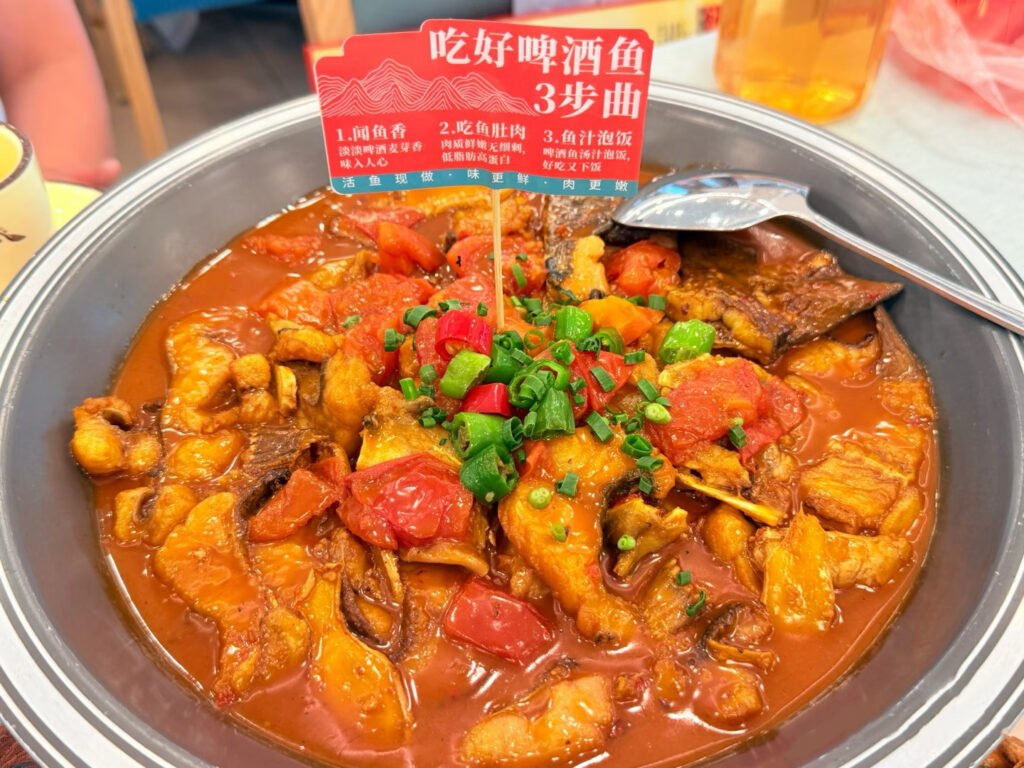
The dish is made with fresh Li River fish, cooked with the scales left on and fried or seared before being simmered in beer with tomatoes and chili peppers. The tomatoes cook down into the broth, adding a sweet and tangy flavor, while the chili brings a little heat. The fish soaks up the aroma of the beer along with the sweet, tangy, and spicy flavors of the sauce, making it incredibly appetizing—and perfect with a bowl of rice.
Lipu Taro Pork
This is another classic Guilin dish, and the star of it is Lipü taro, a prized local variety known for its naturally rich, fragrant flavor and wonderfully fluffy texture.
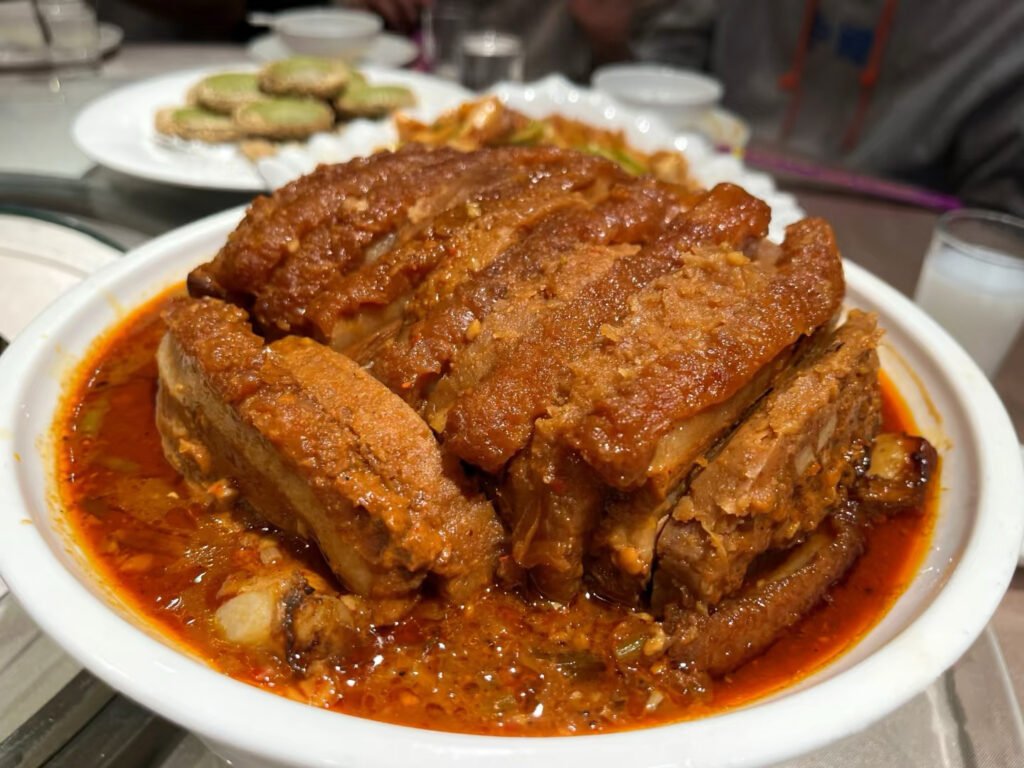
The dish is made with thick slices of well-layered pork belly and Lipü taro. The pork is first fried, then steamed together with the taro. As it cooks, the pork releases its rich fat, which seeps into the taro and makes it wonderfully creamy, fragrant, and full of savory pork flavor.
The result is savory with a subtle sweetness, rich but surprisingly not greasy. And unlike many dishes you’ll find in Guilin, there’s no chili heat at all—making this a great choice if you want to try something comforting and distinctly local without the spice.
Vinegar Blood Duck
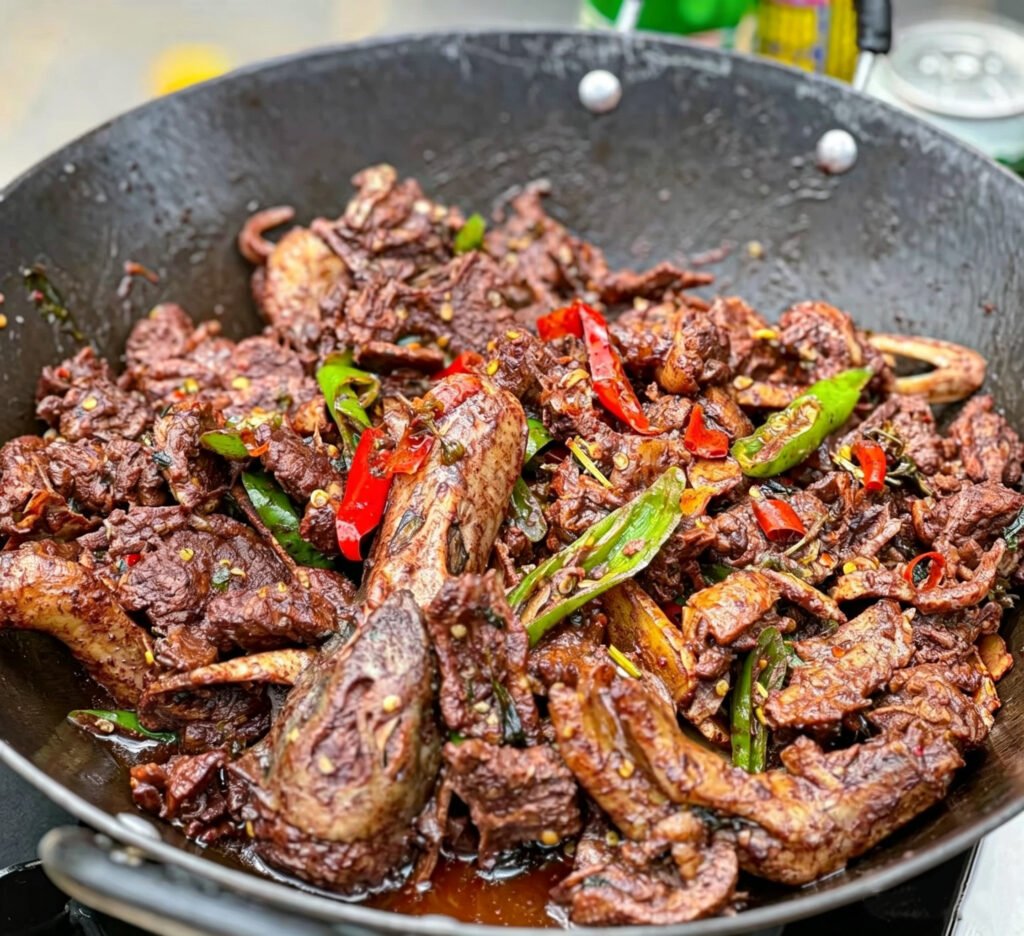
Vinegar Blood Duck is a local specialty from Quanzhou, a county in Guilin known for its bold and distinctive cuisine. Unlike the fresh and savory flavors of beer fish, this is a much more intense dish.
Duck is stir-fried with ginger, green peppers, and other aromatics, then cooked with Kuli vinegar(苦栗醋) , a traditional local vinegar from Quanzhou. Just before serving, fresh duck blood is added and quickly stir-fried into the sauce. Each bite brings a bold mix of sour, salty, and spicy flavors, with the duck blood coating the firm, chewy meat. The longer you chew, the more savory and fragrant it becomes.
It’s a bold, hearty dish that goes especially well with rice. If you prefer milder flavors or are sensitive to strong duck flavors, this might not be your cup of tea.
Stuffed River Snails
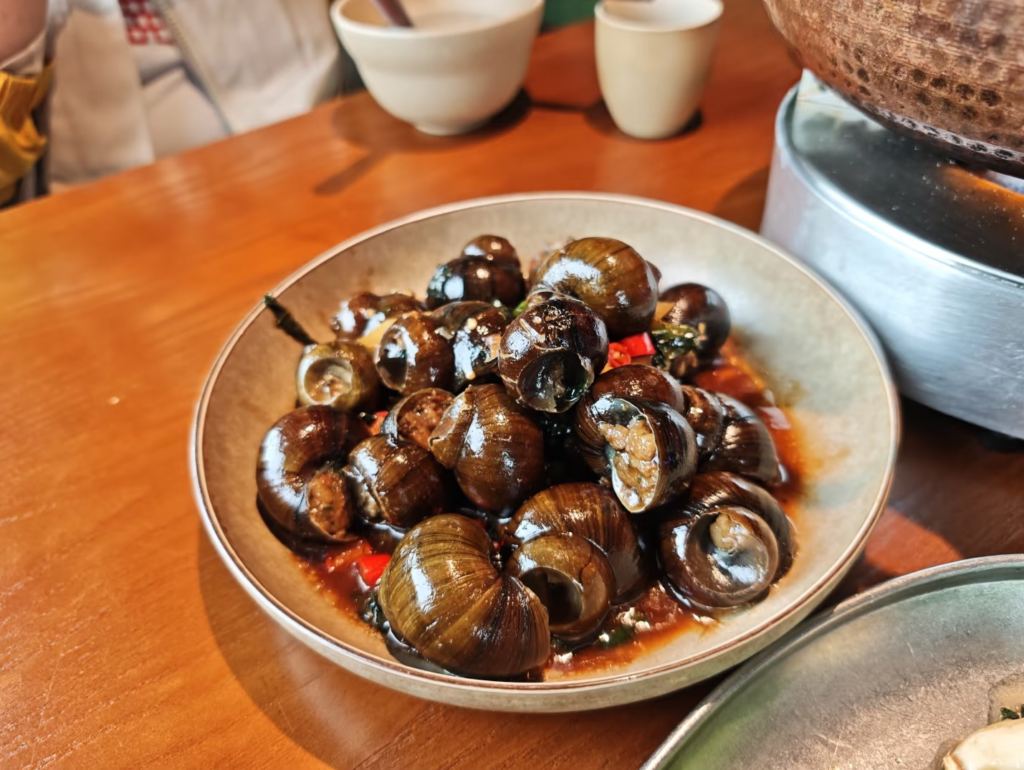
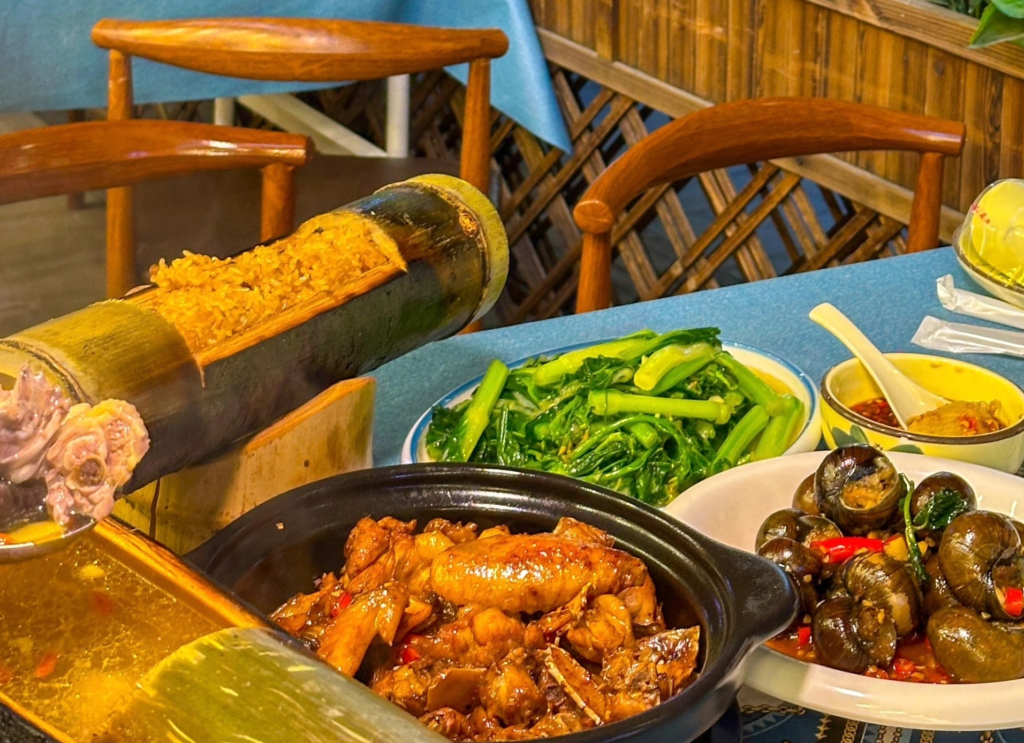
Stuffed river snails are one of Guilin’s famous “Eighteen Stuffed Dishes,” a local cooking tradition of filling different ingredients—such as eggplant, tofu puffs, or peppers—with seasoned meat. Stuffed river snails are one of the most famous among them. For this version, large river snails are chosen, and the snail meat is removed, mixed with minced pork, and stuffed back into the shells. The stuffed snails are then pan-fried and braised with aromatic herbs such as perilla and mint.
You can suck the filling straight out of the shell or use a toothpick to pick it out. Each bite is juicy and packed with the fresh flavor of snail meat and the savory aroma of pork, while the delicate fragrance of perilla lingers in your mouth. You’ll find stuffed river snails at restaurants throughout Guilin and Yangshuo, so they’re an easy local specialty to try.
Guilin Oil Tea
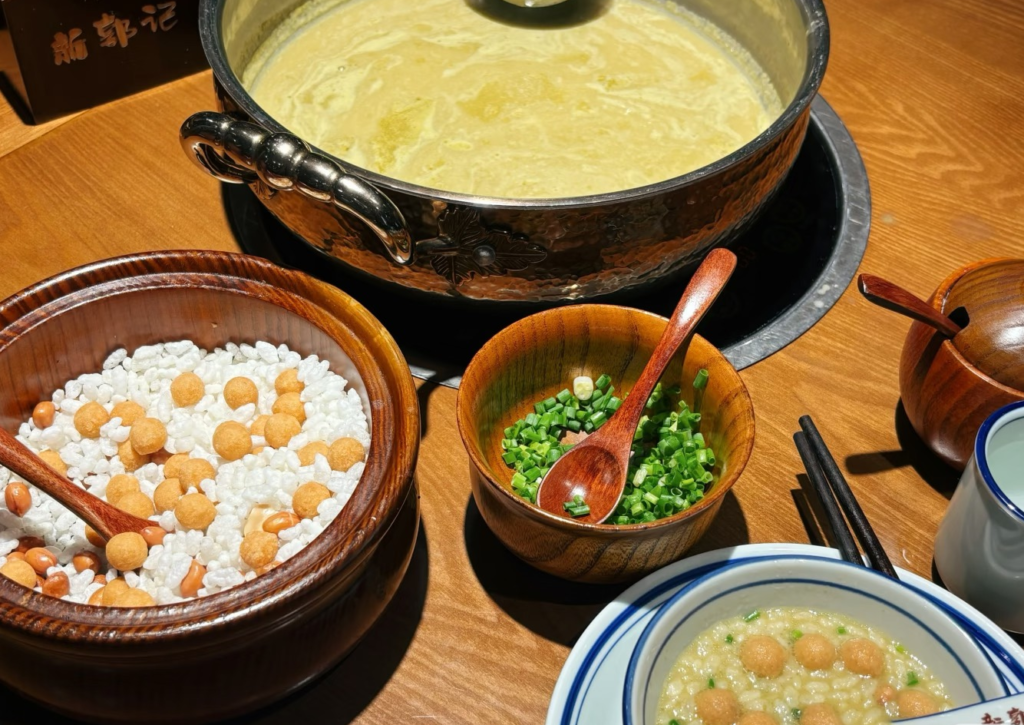
Oil Tea is a traditional tea drink among the Yao and Zhuang communities in northern Guilin. Unlike the sweet tea many visitors may be used to, Oil tea is savory, bitter, and spicy. It was traditionally enjoyed as a warming and invigorating breakfast by local people, and serving it is also one of the most common ways to welcome guests.
Making Oil tea starts with heating lard and pounding ginger and garlic into it to release their juices. Soaked tea leaves are then stir-fried in the mixture before water is added to make the tea broth. It is usually served with crunchy toppings such as puffed rice and roasted soybeans, which you can add to the tea and eat as you go.
For first-time visitors, the bitter and spicy taste can be a little hard to get used to. But as a local saying goes, “The first cup is bitter, the second is astringent, and by the third or fourth, you’ll know what good Oil tea is.” Its charm is something you may need a few cups to discover.
Recommended restaurant:Taotaoji Guanyang Youcha Restaurant/陶陶记灌阳油茶馆 Yufang branch (Shop 2006–207, Xingjin Tashan Yufang, No. 29 Chuanshan Road, Qixing District)
Beef Offal Hotpot
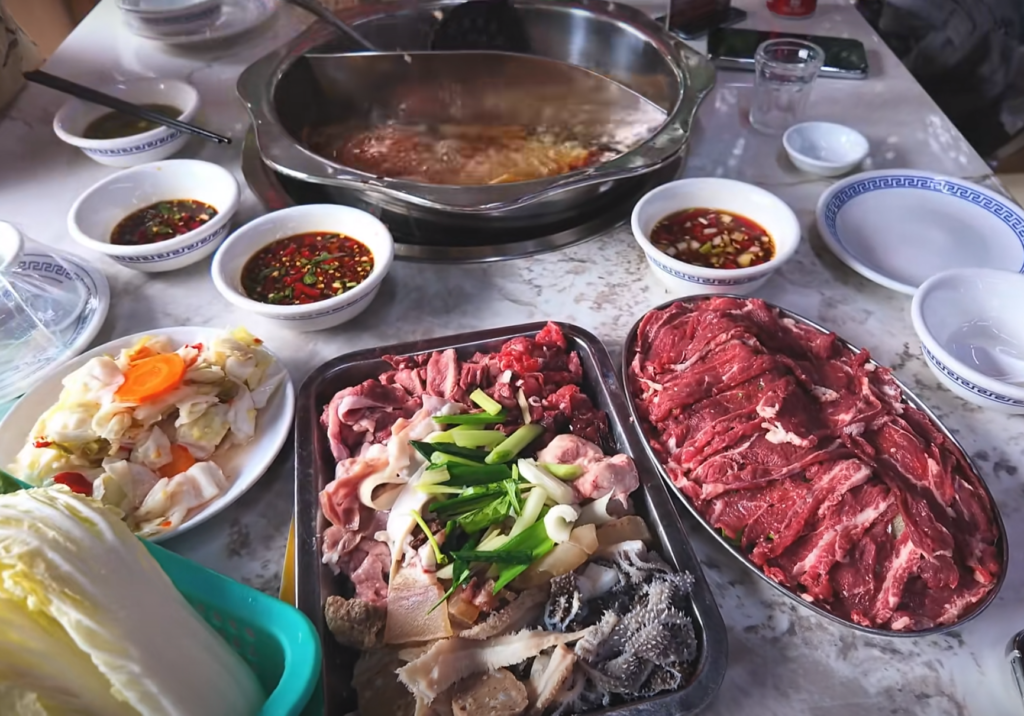
“Beef Eight Treasures”(牛八宝) refers to a hot pot featuring a mix of beef offal, such as tripe, omasum, beef brain, throat, spinal cord, intestines, and blood. The exact combination varies from place to place. If you’re not a fan of offal, this is probably one to skip.
The broth is typically made with sour bamboo shoots, pickled vegetables, pickled chilies, and fresh chilies, creating a tangy, spicy flavor that helps balance the stronger taste of the offal. Freshness is key here, and each cut offers a different texture: tripe and beef throat are crisp and springy, while spinal cord and beef brain are soft and silky. Tender slices of beef are often included as well.
Keep in mind that different cuts need different cooking times, so it’s worth asking the restaurant when each one is ready to eat.That way, you can enjoy each cut at its best.
Recommended restaurant: Zhuji Yangtang Niu Babao/朱记秧塘牛八宝 Guilin Dong’an Branch(Dong’an Road, Xiufeng District)
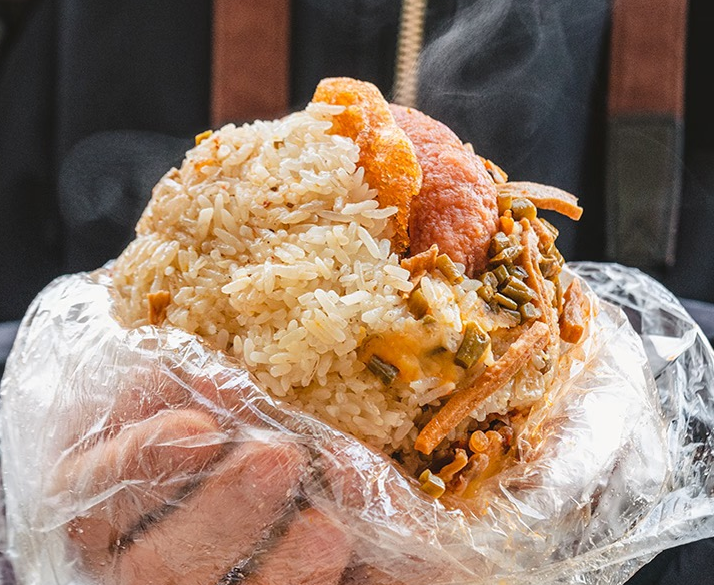
Glutinous Rice
Glutinous rice is one of the most common and beloved snacks among Guilin locals, with a place in everyday life almost comparable to Guilin rice noodles. Beyond the sticky rice itself, two essentials are savory mung bean paste and something crispy, usually thin fried crackers or crispy lotus root slices. These are combined with classic fillings such as Chinese sausage, pickled long beans, and dried radish, while some vendors add their own house specialties.
The whole rice ball is rich, savory, and fragrant, with layers of soft, chewy, and crunchy textures coming together in every bite. It’s simple but incredibly satisfying—and one rice ball can easily keep you full all morning. A serving usually costs around RMB 5 and rarely more than RMB 10, making it an easy local snack to try.
Recommended restaurant: Nuoxiang Post Station/糯香驿站 shijiayuan branch (Opposite the Qixing District Branch of the Municipal Environmental Protection Bureau, Shijiayuan Road, Qixing District)
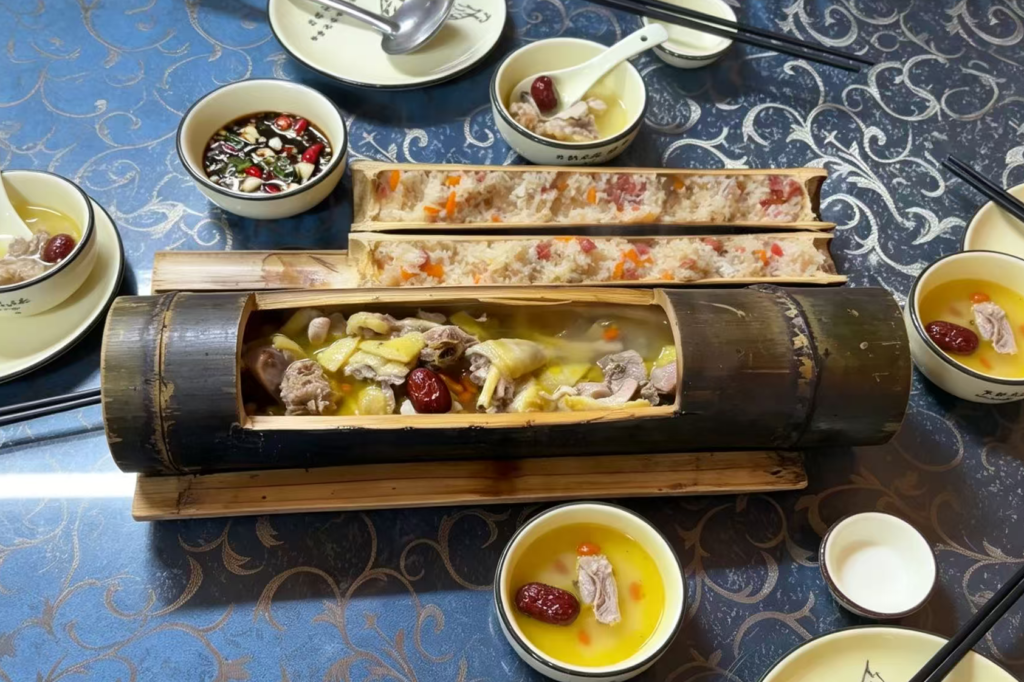
Bamboo Tube Rice & chicken
With bamboo forests covering the mountains around Guilin, the Yao and Zhuang communities who have long lived in these areas have traditionally used fresh bamboo as a natural cooking vessel. When heated by boiling, roasting, or steaming, the bamboo releases a subtle, sweet, grassy aroma that is absorbed by the food inside.
Bamboo tube dishes are especially common at restaurants in Yangshuo and Longji. Bamboo Tube Cured Pork Rice and Bamboo Tube Chicken Soup are among the most popular. The rice combines glutinous rice with taro, diced cured pork, shiitake mushrooms, corn, and other ingredients, while the chicken soup is made with free-range chicken, sugar cane, water chestnuts, and herbs such as five-fingered peach root and cordyceps flowers. The clear broth is naturally sweet and savory, with tender chicken.
These are classic home-style mountain dishes with mild, comforting flavors, making them an easy choice for almost anyone.
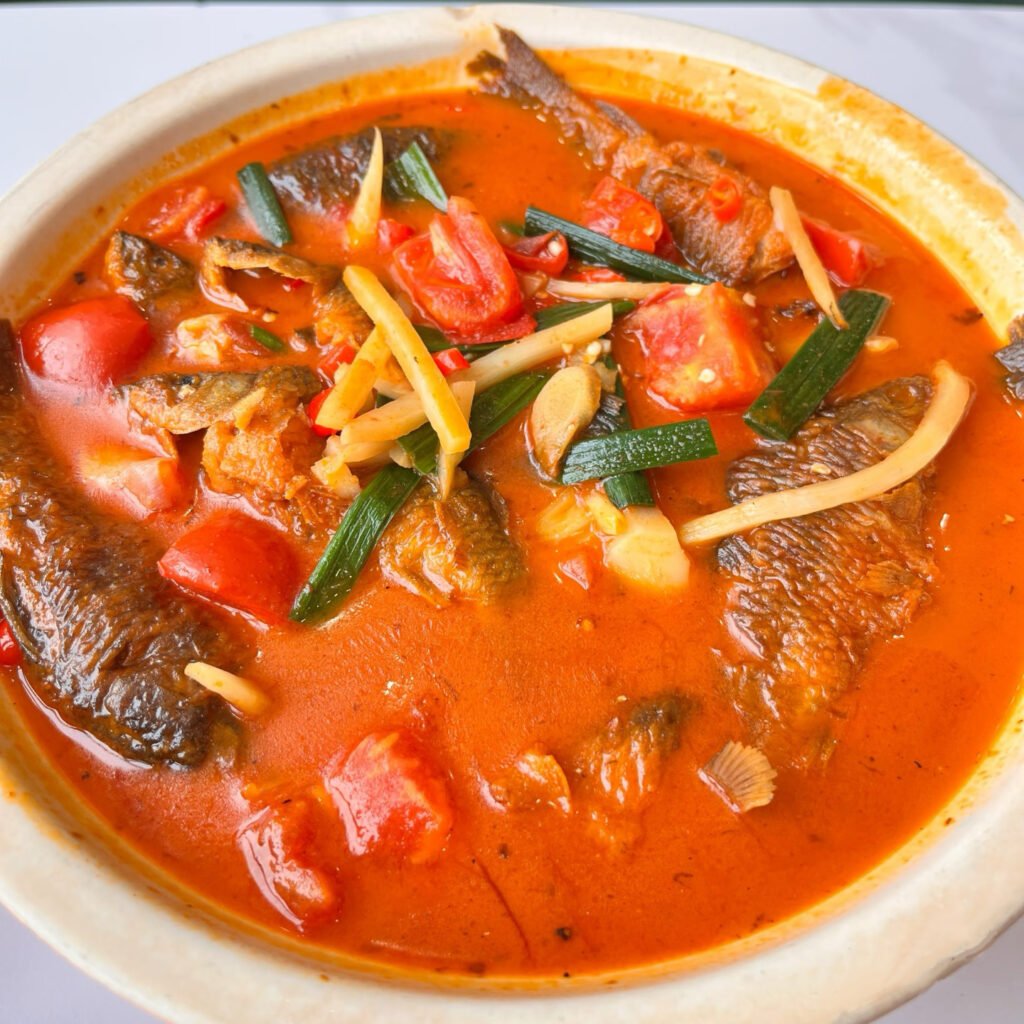
Sour & Spicy Hehua Fish
Sour and Spicy Rice-Fish is a classic home-style dish from Quanzhou, where rice-fish farming has a history of more than a thousand years. The carp are raised in rice paddies and grow by feeding on rice flowers, giving them a distinctly local connection to the countryside.
The fish is cooked with the scales left on, first fried until the skin and scales turn crisp, then simmered with a sour and spicy sauce. The crispy, fragrant skin gives way to tender fish underneath, while the meat soaks up the tangy, spicy sauce and becomes wonderfully appetizing. The softened fish bones also make it easier to eat, even for children and older diners. Compared with the beer fish that many visitors are already familiar with, rice-fish is much more of an everyday favorite among locals.
You can find this dish at restaurants in Longji and Quanzhou. For the best texture and flavor, make sure it’s freshly cooked rather than reheated.
Eat Like a Local: Where to Eat in Guilin
With so many local food options in Guilin, how do you decide where to eat? Below, we’ll introduce a few options to help you choose, from long-established local restaurants in the city to more authentic farmhouse cooking in the countryside, along with some practical tips for finding a good local restaurant on your own. Let’s take a look and find the right place for your trip.
For a More Refined Dining Experience
Guilin is home to several long-established restaurant brands that originated here and have become local favorites. Many offer elegant surroundings and a more polished dining experience, and are popular choices for local banquets and family gatherings. Their menus are extensive, covering many of the local specialties mentioned above, while their flavors are generally consistent and their locations easy to find. If you have limited time and want to try local specialties without the guesswork, these restaurants are some of the safest choices.
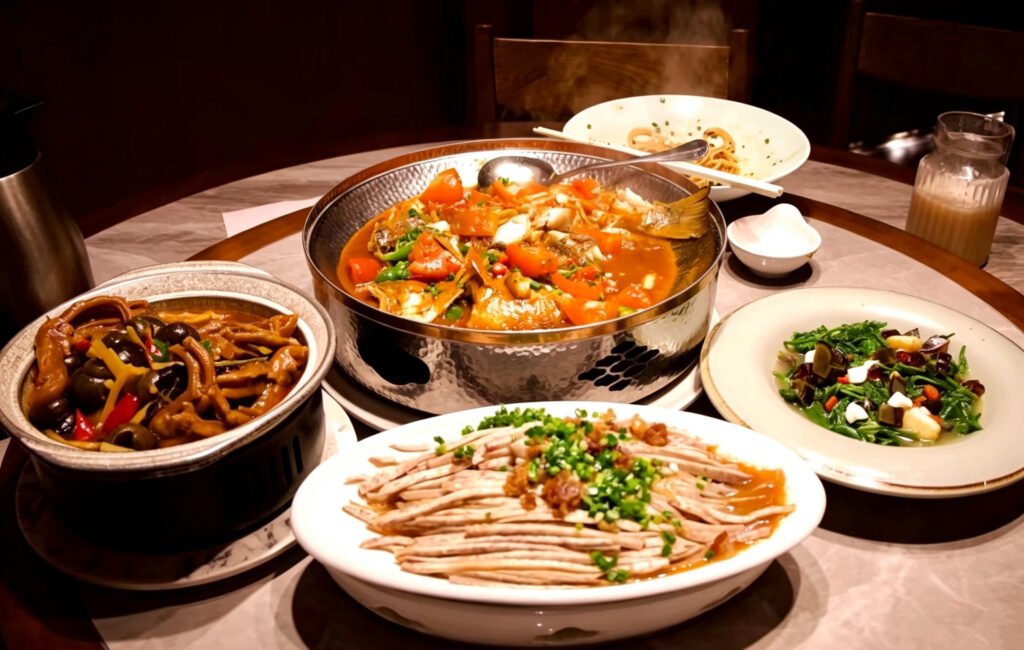
Chunji Roast Goose (椿记烧鹅)
The steady, quality-focused choice. Chunji Roast Goose is one of the safest picks if you want a reliable dining experience with a sense of quality. Its signature dish is roast goose, while the menu also covers many classic Guilin specialties. With its polished setting and consistent quality, it’s a good choice for first-time visitors who want a comfortable introduction to local cuisine.
Average price: around RMB 80–90 per person
A Gan Restaurant (阿甘酒家)
The more down-to-earth local choice. Compared with Chunji, A Gan has a more homestyle feel and focuses more on the kind of local dishes you’d expect to find on a Guilin dining table. Its signature dishes include Vinegar-Poached Chicken and Crispy Chicken, making it a good option if you want something a little more casual and closer to everyday local flavors.
Average price: around RMB 80 per person
Xin Gui Chu (欣桂厨)
The most refined and creative choice. Xin Gui Chu is another long-established local restaurant brand, but compared with Chunji, it puts more emphasis on creative takes on traditional local cuisine. Of the three, it’s the most polished and particular about the overall dining experience. Its signature dishes include roast goose and black tofu, making it a good choice for a more special meal.
Average price: around RMB 80–100 per person
Farmhouse Dining in the Countryside
As mentioned above, Guilin’s food culture is closely connected to its mountains, rivers, and countryside. That’s why some of the best places to eat are often found right in the middle of this landscape—small farmhouse restaurants beside rice fields, rivers, and mountain villages. They usually offer fresh local ingredients, reasonable prices, and simple, traditional ways of cooking that let the natural flavors of the food shine.
Outside Guilin’s city center, whether you’re in Yangshuo, Longsheng, or other rural areas around Guilin, farmhouse restaurants are always a great choice for experiencing local food.
Tips for Finding an Authentic Farmhouse Restaurant
- Ask your guesthouse host
Probably the most reliable way is to ask your guesthouse host which farmhouse restaurants they actually go to. - Look for fresh ingredients
Restaurants with their own courtyard, fish pond, or free-range chickens and ducks are good signs. At the very least, look for live fish in tanks or a clean, open kitchen. - Check for seasonal dishes
Menus featuring “seasonal” (时令)dishes are a good sign. Meat and fish sold by weight, weighed in front of you, and cooked to order are even better. - Look for a family-run feel
A simple, informal setup is often a good sign. The owner and family may handle everything themselves, from cooking to serving. - Expect a reasonable price
Farmhouse restaurants generally cost around RMB 50–80 per person, depending on what you order.
In reality, finding a truly authentic and delicious farmhouse restaurant isn’t always easy, even for locals. Apart from asking your guesthouse host for a recommendation, you may come across one while exploring a historic village or the surrounding countryside. In those cases, the tips below can help you judge whether a restaurant is worth trying. To make things easier, I’ve also picked out two reliable farmhouse restaurants where the food is freshly prepared, both can also be found on Dianping (大众点评). Just keep in mind that waiting times can be longer, as your dishes are cooked after you order.
Huiting Ecological Farm (惠婷生态农庄)
Located near the Yulong River, Huiting Ecological Farm has its own vegetable garden and raises chickens on-site. Its recommended dishes include Bamboo Tube Free-Range Chicken (竹筒土鸡) and Yangshuo Beer Fish (啤酒鱼).
Farmer’s Home Private Kitchen (农夫之家私房菜馆)
Located in Dazhai Village in the Jinkeng area of the Longji Rice Terraces, this farmhouse restaurant uses locally sourced ingredients. Try the Stir-Fried Fresh Bamboo Shoots with Cured Pork (鲜笋炒腊肉), Bamboo Tube Chicken (竹筒鸡), and Yao-Style Stuffed Tofu (瑶家豆腐酿).
How to Find Good Local Restaurants
These tips aren’t just for Guilin—they can be useful anywhere in China when you’re looking for a good local restaurant.
Plus, Dianping (大众点评) is one of the most widely used apps in China for finding and reviewing restaurants, attractions, entertainment, and other local businesses.
- Check Dianping, but don’t chase the highest score
A rating around 4.2–4.6is a good range to explore. Be cautious with scores close to 4.7 or 5.0, as some extremely high ratings in China may be influenced by fake or incentivized reviews. - Read the recent reviews—and the bad ones
Recent reviews can tell you whether the food and service are still consistent. Pay attention to repeated complaints about food quality, hygiene, or tourist pricing rather than isolated comments about personal taste. - Look at the restaurant itself
A local restaurant doesn’t have to look fancy. A simple storefront, a practical dining room, and a menu focused on local dishes can all be good signs. - Look for a focused menu
A good local restaurant often does a few dishes well rather than trying to offer everything. Be cautious of restaurants with huge menus covering every kind of Guilin cuisine, especially when almost every dish comes with a large photo. - Look at who’s eating there
You can often tell when a restaurant has a strong local following. If you see plenty of older people, families, or office workers coming in for lunch or dinner, that’s usually a reassuring sign. - Watch out for tourist-trap signs
Be cautious if staff aggressively recommend expensive “special” dishes, prices aren’t clearly shown, or the restaurant relies heavily on tourist-oriented promotions. Checking the menu and prices on Dianping beforehand can help you avoid surprises.
Hopefully, this guide has given you a better idea of what to try and where to look for it. Pick the dishes that sound best to you, and use the tips above to find a restaurant that suits your taste. Most importantly, enjoy discovering the flavors of Guilin along the way!